Choosing the perfect purple prom dress starts with understanding fabric. The material you select affects everything from comfort to style. Three popular options stand out: satin, chiffon, and tulle. Each fabric offers unique benefits and challenges.
This guide breaks down what makes each material special. You’ll learn about texture, drape, and maintenance. Additionally, you’ll discover which fabric suits different body types and prom themes. By the end, you’ll know exactly which purple fabric matches your vision.
Understanding Satin for Purple Prom Dresses
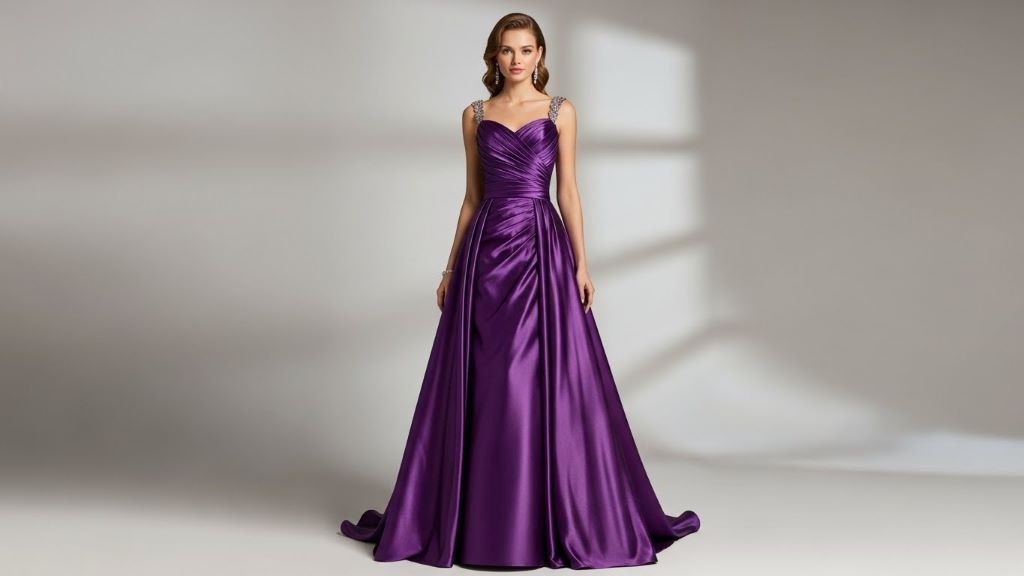
Satin creates a luxurious look that catches light beautifully. This fabric features a glossy front surface and a dull back. The shine comes from the weaving technique, not the fiber itself. Purple satin appears rich and regal, making it perfect for formal events.
The fabric drapes smoothly against the body. It hugs curves while creating elegant lines. However, satin shows every wrinkle and crease. You’ll need to handle it carefully before and during prom night.
Satin works wonderfully for structured silhouettes. Mermaid gowns and fitted bodices look stunning in this material. The fabric adds weight to the dress, which helps it hang properly. Therefore, satin suits those wanting a sophisticated, classic appearance.
Chiffon: The Romantic Purple Fabric Choice
Chiffon brings an airy, ethereal quality to purple prom dresses. This sheer fabric feels light as a feather. Manufacturers create it using tightly twisted yarns in a plain weave. The result is a slightly rough texture that moves gracefully.
Purple chiffon flows beautifully with every step. The fabric creates soft, romantic movements that photograph wonderfully. Additionally, chiffon layers well, allowing designers to add depth and dimension. Many gowns feature multiple chiffon layers for added coverage and volume.
This fabric forgives minor figure flaws. The flowing nature disguises areas you might feel self-conscious about. Chiffon works perfectly for A-line dresses, empire waists, and flowing skirts. However, the delicate material requires gentle handling and professional cleaning.
Tulle: Creating Drama in Purple
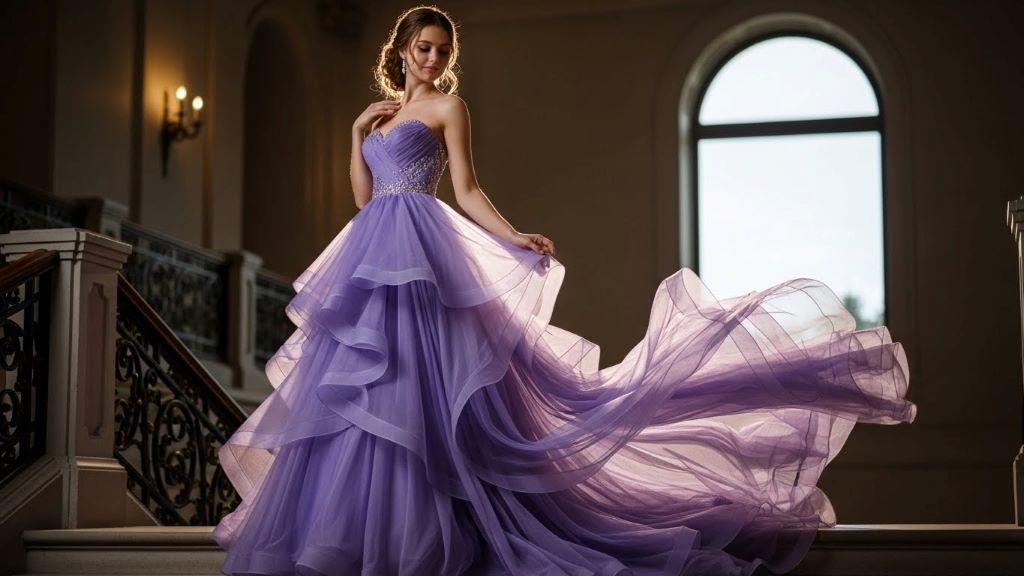
Tulle offers maximum drama and princess-like appeal. This fine netting fabric comes in varying stiffness levels. Softer tulle drapes gently, while stiffer versions create volume and structure. Purple tulle can look whimsical or elegant depending on how designers use it.
The fabric excels at creating volume without weight. Ball gowns and full skirts made from tulle feel surprisingly light. Multiple layers produce that fairytale effect many prom-goers desire. Furthermore, tulle holds its shape throughout the night without constant adjustment.
Tulle works differently than other fabrics. It doesn’t drape or cling to the body. Instead, it stands away, creating space between fabric and skin. This quality makes it ideal for hiding problem areas while adding visual interest.
Comparing Comfort Levels
Comfort varies significantly among these three fabrics. Satin feels smooth against skin initially. However, the material doesn’t breathe well. You might feel warm after dancing for extended periods. The fabric can also stick to skin when you perspire.
Chiffon offers superior breathability. Air flows through the loose weave easily. This makes chiffon comfortable for spring and summer proms. Nevertheless, the rough texture might irritate sensitive skin. Consider a lining underneath for added comfort.
Tulle presents unique comfort challenges. The netting can feel scratchy without proper lining. Additionally, sitting becomes awkward with extremely full tulle skirts. However, the lightweight nature means you won’t feel weighed down. Many find this tradeoff worthwhile for the dramatic effect.
Durability and Maintenance Considerations
Satin requires careful maintenance to preserve its beauty. The fabric snags easily on jewelry and rough surfaces. Water spots show prominently on the glossy surface. Therefore, professional dry cleaning is essential. Store satin dresses hanging in breathable garment bags to prevent wrinkles.
Chiffon needs gentle handling despite its delicate appearance. The fabric resists wrinkles better than satin. However, it tears easily if caught on sharp objects. Hand washing is possible for some chiffon dresses, though professional cleaning stays safer. According to Vogue’s fabric care guide, delicate fabrics last longer with proper professional maintenance.
Tulle proves surprisingly durable for its delicate look. The netting structure resists tears better than solid weaves. Wrinkles shake out easily or disappear with gentle steaming. However, tulle can lose its shape if stored improperly. Keep tulle dresses hanging with adequate space around them.
Price Point Differences
Budget plays a crucial role in fabric selection. Satin typically costs more than other options. High-quality satin uses silk fibers, driving up prices significantly. Polyester satin offers a more affordable alternative while maintaining similar appearance.
Chiffon falls into the mid-range price category. Silk chiffon commands premium prices. Polyester versions provide budget-friendly options. The layering required for proper coverage can increase overall dress costs regardless of fiber content.
Tulle generally offers the most affordable option. The simple construction keeps manufacturing costs down. However, dresses requiring many tulle layers might cost more. Additionally, designer embellishments on tulle can raise prices substantially.
Best Body Types for Each Fabric
Satin flatters hourglass and athletic figures beautifully. The fabric highlights curves while creating elegant lines. Petite frames look sophisticated in satin without overwhelming volume. However, those seeking to minimize certain areas might find satin too revealing.
Chiffon suits nearly every body type gracefully. The flowing fabric flatters pear shapes and apple shapes equally well. Tall women look ethereal in flowing chiffon gowns. Additionally, plus-size figures benefit from chiffon’s forgiving drape. The fabric skims rather than clings, creating flattering silhouettes.
Tulle works wonderfully for petite frames wanting more presence. The volume creates visual impact without actual weight. Hourglass figures look stunning with fitted bodices and full tulle skirts. However, very tall or plus-size individuals might feel overwhelmed by extremely full tulle designs.
Styling Purple Prom Dresses by Fabric
Satin purple dresses pair beautifully with minimal accessories. The fabric’s natural shine provides enough visual interest. Silver or gold jewelry complements purple satin elegantly. Sleek updos showcase the dress’s neckline and fabric drape. According to InStyle’s prom styling tips, matching your accessories to your fabric type creates cohesive looks.
Chiffon invites romantic styling choices. Loose waves or soft curls complement the flowing fabric perfectly. Delicate jewelry works better than bold statement pieces. Consider floral accessories for garden or outdoor proms. The ethereal quality of chiffon supports bohemian or romantic themes.
Tulle dresses make bold statements on their own. Keep hair and makeup balanced to avoid competing with the volume. Simple jewelry prevents the look from becoming too busy. However, sparkly accessories add magical touches to tulle gowns. Princess-themed proms call for tulle with dramatic styling.
Weather and Season Considerations
Spring and summer proms favor breathable fabrics. Chiffon excels during warmer months. The airy material keeps you comfortable while dancing outdoors. Tulle also works well for warm weather despite its volume. The netting allows air circulation that prevents overheating.
Winter and fall proms suit heavier fabrics better. Satin provides warmth while maintaining elegance. The material’s weight feels appropriate for cooler temperatures. Additionally, satin photographs beautifully under indoor lighting typical of winter events.
Indoor venue temperature affects fabric choice too. Heavily air-conditioned ballrooms make satin more comfortable. Outdoor tents might become stuffy, favoring chiffon or tulle. Consider your venue’s climate control when selecting fabric.
Making Your Final Decision
Start by considering your prom’s formality level. Black-tie events call for luxurious satin. Garden parties suit romantic chiffon beautifully. Fairytale-themed proms practically demand tulle creations.
Next, evaluate your comfort priorities. Long events require breathable fabrics like chiffon. If you prioritize appearance over comfort, satin creates stunning photographs. Those wanting drama without weight should choose tulle.
Finally, consider your budget and maintenance willingness. Satin requires professional care and careful handling. Chiffon needs gentleness but forgives minor mishaps. Tulle proves most forgiving for first-time formal dress owners.
Conclusion
Choosing between satin, chiffon, and tulle for your purple prom dress depends on multiple factors. Satin offers timeless elegance with luxurious shine but requires careful maintenance. Chiffon provides romantic flow with superior breathability and flatters most body types. Tulle creates dramatic volume while remaining lightweight and affordable.
Consider your prom’s theme, venue, and season when deciding. Think about your personal comfort needs and styling preferences. Additionally, factor in your budget and willingness to maintain the dress properly. Each fabric brings unique benefits to your special night.
The perfect purple prom dress fabric matches your personality and priorities. Whether you choose satin’s sophistication, chiffon’s romance, or tulle’s drama, confidence makes any fabric shine. Trust your instincts and select the material that makes you feel amazing.
Frequently Asked Questions
Can you mix different fabrics in one purple prom dress?
Yes, many designers combine fabrics for unique effects. A satin bodice with chiffon overlay creates interesting texture contrast. Tulle skirts often feature satin waistbands for structure. However, ensure fabrics complement rather than compete with each other.
Which fabric photographs best for prom pictures?
Satin photographs beautifully due to its light-catching properties. However, it can create glare with direct flash. Chiffon photographs softly and romantically in natural light. Tulle adds dimension and interest to photos from any angle.
How do I prevent my purple fabric from fading?
Store your dress away from direct sunlight in a cool, dark place. Use acid-free tissue paper between folds. Avoid hanging in plastic bags, which trap moisture. Professional cleaning helps preserve color better than home washing.
What undergarments work best with each fabric type?
Satin shows every line, requiring seamless undergarments. Chiffon typically needs built-in linings, making undergarment choice flexible. Tulle dresses often include petticoats, so wear minimal, comfortable undergarments that won’t bunch.
Can alterations work on all three fabric types?
Professional seamstresses can alter all three fabrics successfully. However, satin shows needle holes if alterations are redone multiple times. Chiffon requires experienced hands to avoid puckering. Tulle proves easiest to alter without visible damage.
Related Topics:
Summer Hiking Outfits for Ladies: Stay Cool and Comfortable on the Trails
How to Style White Boots: Ultimate Fashion Guide for Every Season